

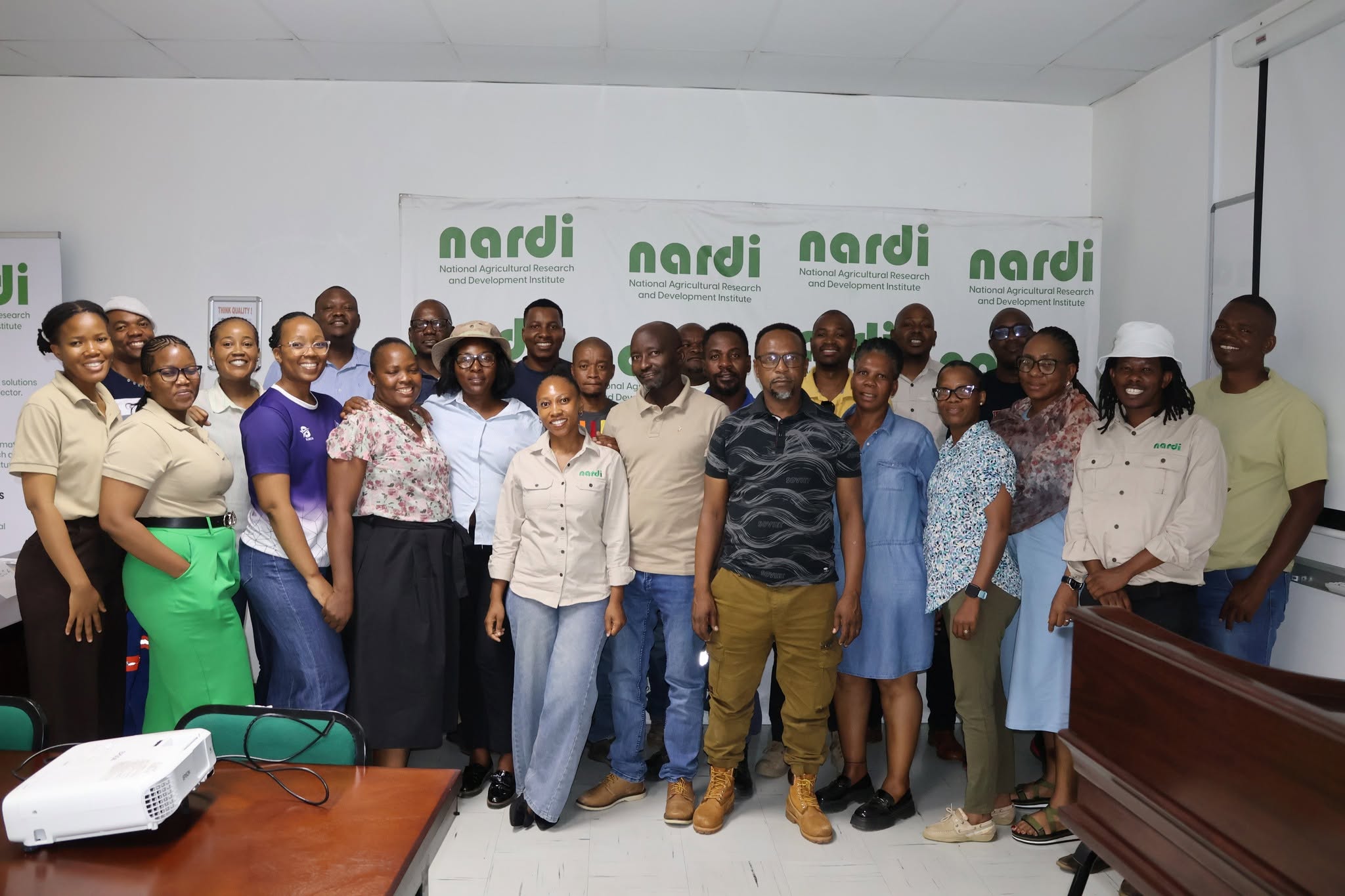
Twenty employees of Naledi Mining Services Company have embarked on a five-day training programme in fruit and vegetable processing at the Kanye Research and Innovation Centre (KRIC), marking a significant step towards equipping workers with practical skills for entrepreneurship and sustainable livelihoods beyond the mining industry.
The training, which commenced on Monday and concludes on Friday, 30 October 2026, is delivered through the National Agricultural Research and Development Institute (NARDI) Skills and Knowledge Transfer Programme. It forms part of Naledi Mining Services Company’s Moselawapula Life Skills Programme, inspired by the Setswana proverb “Mosele wa pula o epiwa go sale gale” — underscoring the importance of preparing for the future while opportunities are available.
The initiative reflects the company’s commitment to employee development, economic empowerment and long-term well-being by enabling employees to diversify their skills, explore business opportunities and build financial resilience for themselves and their families.
Speaking during the official opening, Dr Boitumelo Stokie Motswagole, Chief Research Scientist – Food Innovation, Health and Nutrition at KRIC, highlighted NARDI’s capacity to support food processing through research, product characterisation, value addition, quality and safety testing, and shelf-life assessment.
She described KRIC as a food research, development and innovation hub, adding that the institute was pleased to resume delivering formal food processing training following the completion of accreditation-related processes with the Botswana Qualifications Authority and Human Resource Development Council.
Dr Motswagole said the development positions NARDI to expand access to food processing knowledge and technical services, helping Batswana transform agricultural produce into value-added products.
Food safety and regulatory compliance featured prominently on the first day. Dr Boitshepo Keikotlhaile, Chief Research Scientist – Food Safety and Quality, emphasised that food processors must understand and comply with legislation governing the handling, preparation, processing and sale of food.
She outlined Botswana’s regulatory framework, including the Food Control Act of 1993, the Public Health Act, the Standards Act of 1995 and the Consumer Protection Act of 1998. She also highlighted the role of relevant government institutions and international frameworks, including the Codex Alimentarius, developed through the Food and Agriculture Organization and the World Health Organization.
Dr Keikotlhaile stressed that compliance is essential to protecting consumers, maintaining product quality and building confidence in food businesses.
Senior Research Scientist Malebogo Ralefala further addressed fruit and vegetable contaminants and food adulteration, drawing attention to the global burden of unsafe food. She cited estimates of 866 million foodborne illnesses and 1.52 million deaths annually, alongside substantial productivity losses and medical costs associated with contaminated food.
Other sessions covered good hygiene practices, equipment design and facility layout, cleaning and maintenance, and the control of food contamination through proper storage, pest management and waste disposal.
The programme brought together NARDI specialists, including Senior Research Scientist Basadi Masitlha, Training Coordinator Mompati Molao, Research Scientist Kitso Koboyangaka and Kago Kabelo. Also present were Dr Lemogang Kwape, Chief Research Scientist – Food Processing and Industrial Support, and Naledi Mining Services Company Training Coordinator Onkamile Robert.
The initiative will continue next week, when a second group of 20 employees undertakes training in meat and meat products processing.
Through this partnership, NARDI and Naledi Mining Services Company are demonstrating how technical knowledge and practical skills can create pathways to entrepreneurship, strengthen food value chains and prepare employees for future economic opportunities.
NARDI will announce its forthcoming food safety and food processing training schedule through its official communication channels.
