

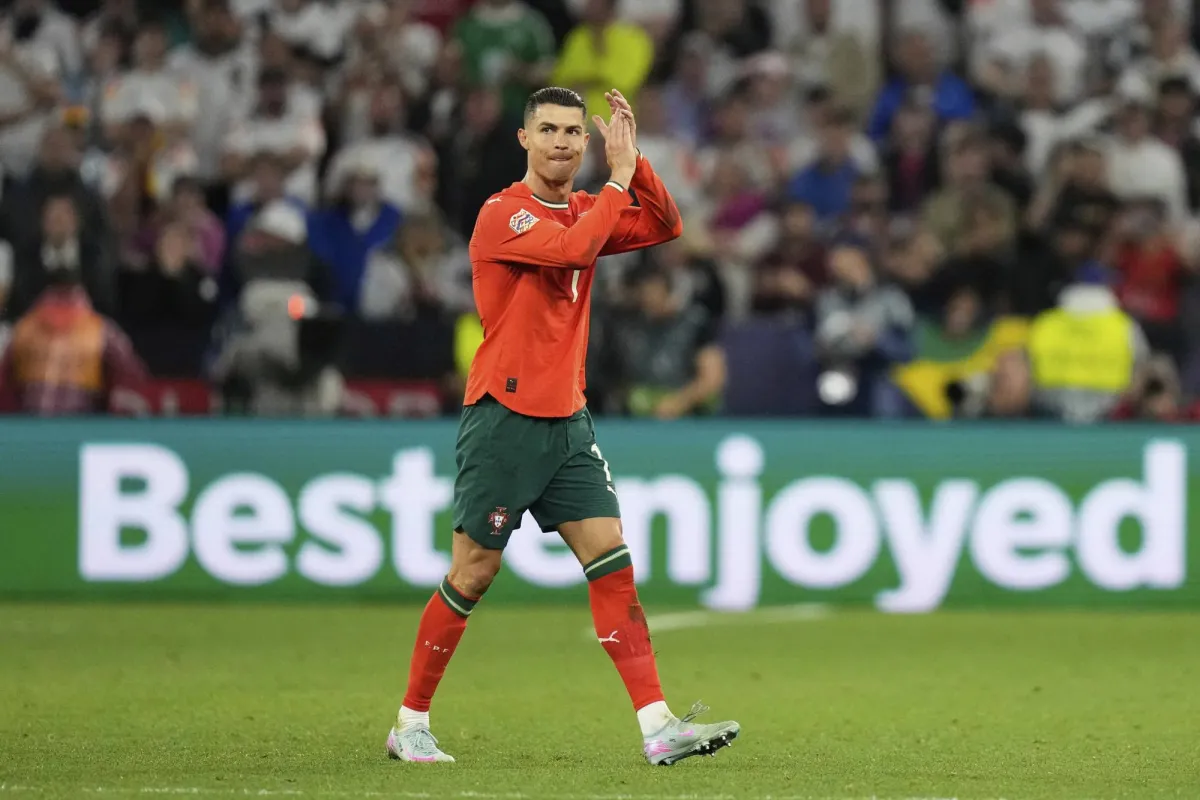
From teenage sensation to Portugal’s greatest footballing icon, Cristiano Ronaldo’s international career stands as one of the most remarkable chapters in the history of the beautiful game.
For more than two decades, Cristiano Ronaldo has carried the hopes, ambitions and pride of Portugal on the international stage. His journey, defined by extraordinary goalscoring records, relentless ambition and an insatiable desire to win, has transformed him into one of football’s most influential sporting figures.
The prospect of his international retirement therefore represents more than the departure of a legendary footballer. It signals the approaching conclusion of an era that has shaped Portuguese football and inspired generations across the world.
Since making his senior international debut in 2003, Ronaldo has evolved from a gifted young winger into the face of Portuguese football. His leadership, consistency and ability to deliver in defining moments have made him an indispensable figure for the national team.
Ronaldo, 41, announced on Thursday, 5 November 2026, that he was bringing his international career to an end, declaring that the time had come to hand the iconic number seven shirt to the next generation.
“Today, the time has come to pass it on to the future. It was not an easy decision because some decisions are not made with the mind alone. They are also made with the heart,” Ronaldo said in his farewell message. AFP+1
The numbers behind his international career are extraordinary. Ronaldo leaves Portugal having accumulated 234 international appearances and 146 goals, making him the most-capped player and highest goalscorer in men’s international football history.
His international journey began in August 2003, with his first major tournament coming at Euro 2004, hosted by Portugal. Although the hosts suffered a heartbreaking defeat to Greece in the final, the tournament announced the arrival of a generational talent.
Twelve years later, Ronaldo finally achieved the ultimate dream when Portugal defeated France to win Euro 2016. Despite being forced off through injury in the final, his leadership from the sidelines became one of the defining images of that historic triumph.
He subsequently helped Portugal secure the UEFA Nations League titles in 2019 and 2025, further cementing his place in the country’s sporting history. He also became the first male footballer to score at six different FIFA World Cup tournaments. Manchester United+1
However, his final chapter with Portugal was not without controversy. A disagreement with national team coach Jorge Jesus, following his omission from the starting line-up, created uncertainty over his future. His departure from the national team camp further fuelled speculation before Thursday’s announcement brought clarity.
Interestingly, Ronaldo’s retirement does not signal the end of his professional football career. The Al Nassr forward is expected to continue playing at club level, with his pursuit of the extraordinary 1,000-career-goal milestone remaining a major talking point.
For Portugal, the challenge now is to build a new identity without the player who has carried its attacking ambitions for over two decades.
For football supporters worldwide, however, the legacy is undeniable. Ronaldo leaves behind records that may stand for generations, trophies that transformed Portuguese football and memories that transcended club rivalries.
