

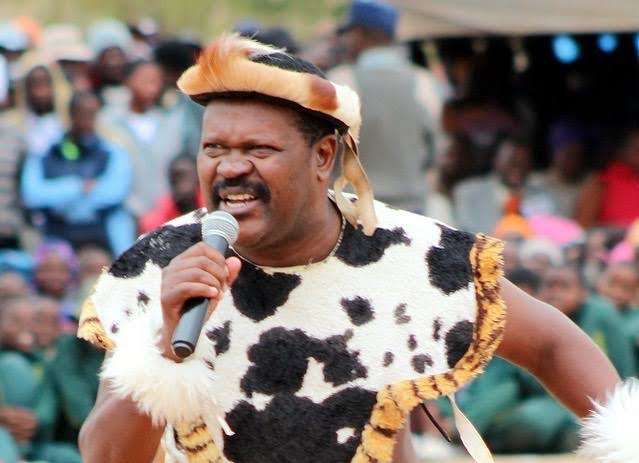
Zimbabwean poet, musician and cultural icon Albert Nyathi believes that the decolonisation of the African mind must begin with an honest examination of the continent’s history, including the prejudices and distortions that have shaped how Africans understand themselves and one another.
In an exchange in Harare with Botswana-born actor, writer and cultural advocate Donald Molosi, Nyathi offers a deeply personal account of his formative years, his political consciousness, his educational experiences and his thoughts on the challenges confronting African education.
His reflections are particularly significant at a time when conversations about decolonising African institutions, reclaiming historical narratives and rethinking education continue to gather momentum across the continent.
A childhood shaped by political consciousness
Nyathi traces his early political awareness to growing up under the influence of the Zimbabwe African People’s Union (ZAPU), the political movement led by the late nationalist leader Joshua Nkomo.
He explains that this political environment contributed to his involvement in politics at a relatively young age.
Although political activism was not particularly pronounced during his school years, he found himself immersed in an intellectually and politically vibrant environment when he enrolled at the University of Zimbabwe.
The institution, he recalls, was a meeting point for influential student leaders, academics and political figures who would later occupy prominent positions in Zimbabwean public life.
Among the student leaders were former Deputy Prime Minister Professor Arthur Mutambara and former Finance Minister Tendai Biti.
His lecturers included Professor Jonathan Moyo, Professor Welshman Ncube and Professor Tawana Kupe, who taught him English Literature and would later become Deputy Vice-Chancellor of the University of the Witwatersrand.
“The University of Zimbabwe breathed politics at the time,” Nyathi recalls.
His experience at the university helped deepen his political awareness and exposed him to the intellectual debates that were shaping Zimbabwe’s post-independence political and social landscape.
From the classrooms of Rhodesia to Zimbabwe
Perhaps the most revealing aspect of Nyathi’s reflections is his account of growing up and receiving an education across two distinct historical periods: colonial Rhodesia and independent Zimbabwe.
He describes significant differences in the historical content taught during the two periods, particularly regarding the country’s liberation struggle.
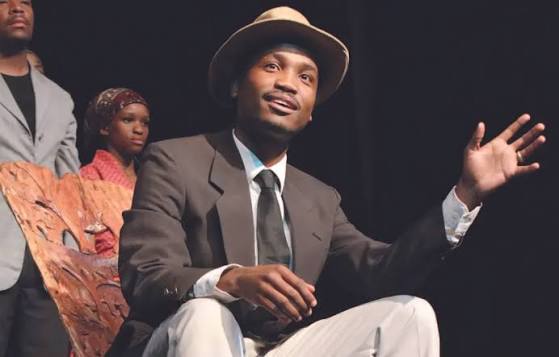
Interestingly, Nyathi admits that he was not initially enthusiastic about education.
Growing up in his village, he had few immediate examples of people whose educational achievements could inspire him. Instead, his childhood heroes were migrant workers who travelled to South Africa to work in the gold mines, particularly through the Wenela recruitment system.
Their return home, often with impressive possessions such as radios and bicycles, represented success in the world he understood at the time.
“I actually never liked school during my Rhodesian days since I never understood the reason for going to school,” he explains.
His disinterest became so pronounced that he eventually ran away from school, prompting his parents to give up trying to force him to attend.
His journey took him across the border into Botswana, where he found employment looking after cattle for a family.
In 1976, he worked in Gobajango, near Molalatau and Mabulu. His employers were Sitas Dikgang and his wife, Better, who originally came from Rhodesia.
It was during this period away from formal education that Nyathi’s perspective gradually changed. As his understanding of the value of education developed, he made the decision to return to school.
This time, his motivation was different.
“When my eyes opened, I decided to go to school, and enjoyed it very much, now that I understood my reasons for going to school,” he says.
His story offers a compelling reflection on the importance of purpose, opportunity and personal motivation in education.
The painful memories and defining moments of school
Nyathi’s recollections of schooling in Rhodesia are mixed, combining difficult childhood experiences with moments that, in retrospect, provided valuable lessons.
His worst memories include the physical beatings he received from teachers and his father, particularly because of his repeated failure to attend school.
Yet he also remembers the relief of being away from the responsibility of herding goats and the excitement of having shoes and wearing underwear for the first time.
In independent Zimbabwe, his educational experience was considerably more positive, although he remained troubled by what he perceived as omissions in the teaching of history.
His school years were also marked by leadership and artistic achievement.
He served as Head Boy at both primary and secondary school, holding leadership positions for a combined five years.
His passion for performance and poetry also began to flourish during this period.
One particularly memorable achievement was winning the Eversharp National High Schools Poetry Competition, whose theme was Water and the Land.
The recognition came with a prize of US$200, books and ballpoint pens, presented during a school assembly.
At university, his artistic journey continued when he was cast in the leading role of Nelson Mandela in a theatrical production titled Mandela – The Spirit of No Surrender.
The production was staged by Zambuko/Izibuko under the direction of his then lecturer, Dr Robert McLaren.
These experiences helped shape the artistic identity of a man who would go on to become one of Zimbabwe’s recognised voices in poetry and performance.
The African classroom remains only partly decolonised
Turning to the broader question of decolonising African education, Nyathi offers a pointed assessment.
He argues that African classrooms have made progress but remain only partially decolonised, a situation he considers potentially dangerous.
For him, the problem lies not simply in what African learners are taught, but also in what is deliberately or inadvertently left out of the curriculum.
He believes African countries must take responsibility for teaching their own histories accurately, without ideological distortions or selective interpretations.
“The African classroom is only partly decolonized, and that can be dangerous,” he observes.
His concern centres particularly on the teaching of liberation history and the need to present historical accounts in their entirety.
He argues that learners deserve the truth rather than incomplete narratives that leave them struggling to understand their own societies.
Nyathi’s position is that decolonisation must go beyond replacing foreign textbooks or introducing African perspectives into existing curricula. It must involve a genuine commitment to historical honesty and intellectual independence.
He also emphasises that the process requires Africans to confront prejudices among themselves.
“Prejudices about each other have no room in the decolonization of the African mind. That is the starting point,” he says.
He adds that correcting historical distortions rooted in prejudice among Africans themselves is an essential part of the process.
This is an important distinction: decolonisation cannot succeed if Africans continue reproducing divisions, stereotypes and historical misrepresentations within their own societies.
Education must move beyond books and theory
Nyathi also engages with UNESCO’s concerns about the largely theoretical nature of education in many African countries.
He agrees that African education remains excessively book-oriented, with insufficient emphasis on practical learning and the development of skills that can translate into meaningful employment.
“UNESCO’s statement is largely true. African education is mostly centred on theory. It is too bookish,” he says.
He suggests that this may partly explain the high levels of unemployment experienced across the continent.
His observation raises a fundamental question about the purpose of education in contemporary Africa: are educational institutions preparing young people to participate meaningfully in society, or are they primarily preparing them to pass examinations?
For Nyathi, meaningful educational transformation must address the relationship between what learners study and the realities they encounter outside the classroom.
The challenge is not simply to increase access to education, but to ensure that education equips Africans with the knowledge, practical abilities and critical thinking necessary to shape their communities and economies.
A conversation that transcends borders
The exchange between Molosi and Nyathi is also a reminder of the cultural and historical connections that exist between Botswana and Zimbabwe.
Nyathi’s personal history includes a formative chapter in Botswana, where his experience working in Gobajango in 1976 became part of a much longer journey towards education and artistic expression.
The correspondence between the two cultural figures reflects a shared interest in African identity, history and the role of artists in shaping public discourse.
Towards the end of their exchange, Molosi expressed his hope of returning to Zimbabwe, while acknowledging the financial difficulties artists face in securing sponsorship to travel and engage with fellow creatives across borders.
Nyathi’s response was warm and inviting: “Come, Zim is awaiting you.”
Molosi also expressed his appreciation for Nyathi’s music, singling out Health Heartbeat as a particularly impressive song.
Beyond the personal warmth of the exchange, the conversation highlights the importance of sustaining relationships among African artists, intellectuals and cultural practitioners.
Such interactions create opportunities for dialogue that extend beyond national boundaries and encourage Africans to examine their shared experiences.
Reclaiming the African story
Ultimately, Nyathi’s reflections point to a broader continental responsibility.
Decolonising the African mind requires more than political independence or symbolic changes to educational institutions. It requires Africans to interrogate the histories they inherit, confront the prejudices they perpetuate and develop educational systems that reflect both their historical realities and future aspirations.
His own journey, from a reluctant schoolboy in Rhodesia to a university student immersed in political debate, and eventually to an acclaimed poet and performer, illustrates the transformative power of education when it is embraced with purpose.
His experience in Botswana adds another dimension to that journey, demonstrating how personal encounters across borders can become part of a wider African story.
For Nyathi, the starting point remains clear: Africans must overcome prejudice, correct historical distortions and commit themselves to teaching the truth.
It is a challenge not only for educators and policymakers, but also for writers, artists, historians and the wider African public.
The decolonisation of the African mind, as Nyathi’s reflections suggest, begins when Africans take ownership of their history and become courageous enough to tell it truthfully.
Editorial note: This article is based on Albert Nyathi’s written responses to questions from Donald Molosi. His views and personal recollections have been retained while the material has been structured into a journalistic feature. The interview was conducted in Harare.
