

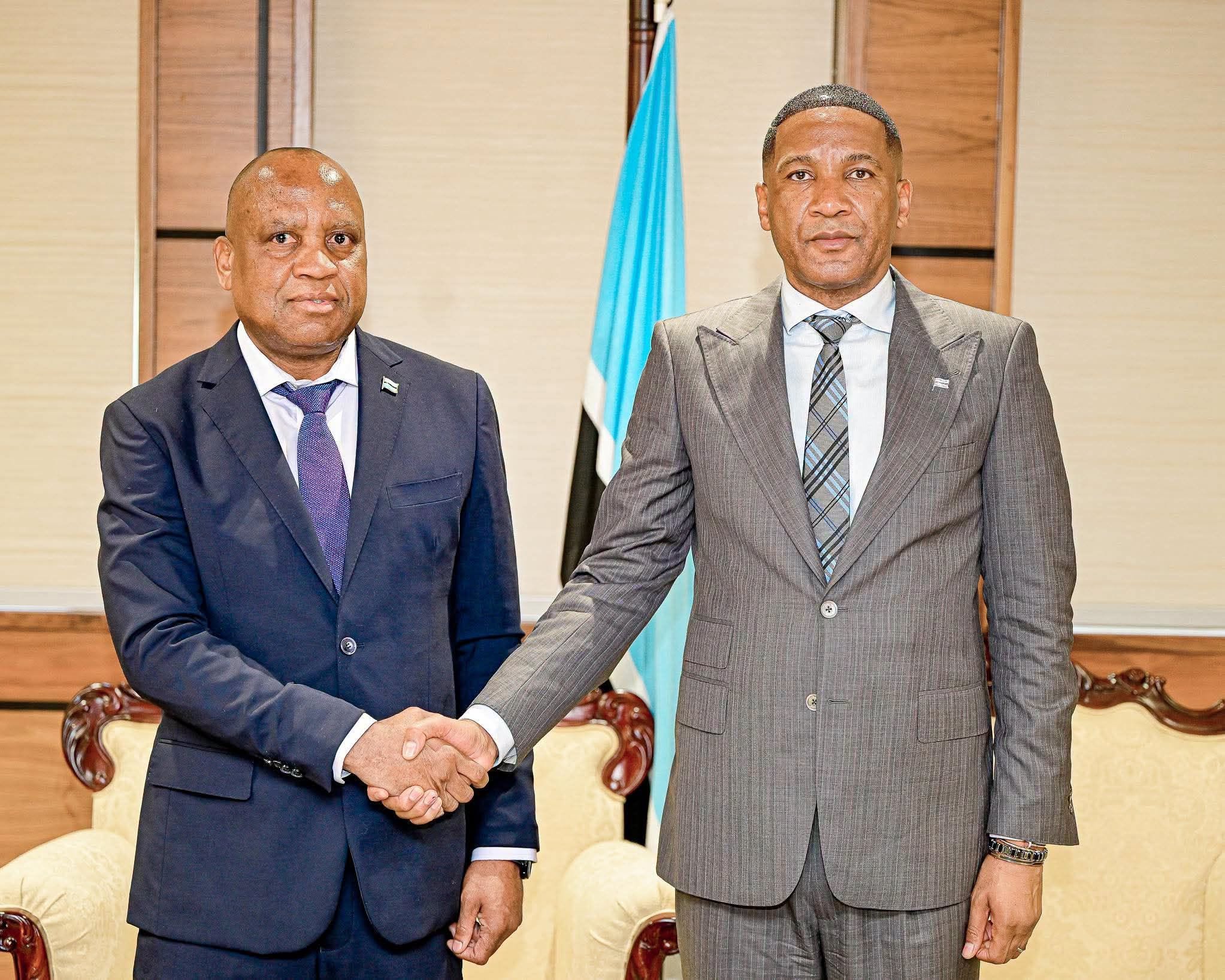
Today, President Duma Boko has appointed Professor Lekoko Sylvester Kenosi as the new Director General of the Directorate of Intelligence and Security (DIS) presents an interesting leadership choice, one that appears to draw on an unusual combination of military experience, academic excellence, international exposure, diplomatic service and institutional management.
While the appointment of an intelligence chief inevitably attracts public scrutiny, Professor Kenosi’s professional background suggests that he brings several attributes that could prove valuable in leading one of Botswana’s most sensitive national security institutions.
Perhaps his strongest qualification is his understanding of information, intelligence management and institutional confidentiality. With a PhD in Information Sciences from the University of Pittsburgh, a Master of Archival Studies from the University of British Columbia and more than two decades of experience in archives and records management, Kenosi has developed a career around the collection, preservation, organisation, governance and protection of information.
These competencies are relevant to modern intelligence operations, where the ability to gather, analyse, manage and safeguard information is central to national security. Intelligence institutions increasingly depend on sophisticated information systems, data governance, institutional knowledge and the responsible handling of sensitive records. His academic and professional background therefore provides a potentially valuable foundation for strengthening the DIS’s information management capabilities.
His military experience also adds an important dimension to his suitability. Having served in the Botswana Defence Force between 1991 and 1994, Kenosi experienced military discipline, command structures and operational responsibilities. His participation in the United Nations Operation in Mozambique (UNOMOZ) further exposed him to international peacekeeping operations and the importance of security coordination.
Although his military service was relatively brief and dates back more than three decades, it provides him with an understanding of structured security environments and the demands of serving national interests.
Equally significant is his diplomatic experience. His appointment as Botswana’s Ambassador to China, Vietnam, Singapore, Pakistan and Malaysia in 2026 offers an additional perspective on international relations, geopolitical interests and the sensitivities surrounding national security. In an increasingly interconnected world, intelligence leadership requires an appreciation of international developments, diplomatic relationships, regional security threats and emerging global risks.
His years in Qatar, Saudi Arabia and the United Arab Emirates also demonstrate an ability to operate in different institutional and cultural environments. Establishing archival institutions and leading specialised departments in these countries speaks to his capacity for organisational development, strategic planning and leadership.
Academically, his record of 22 published journal articles and book chapters, 54 conference paper presentations and involvement in postgraduate supervision demonstrates a strong research orientation. Such intellectual grounding could encourage a more analytical, evidence-driven and professionally accountable intelligence culture.
However, the question of suitability cannot be answered by qualifications and an impressive international résumé alone.
The DIS is not an academic institution, diplomatic mission or archival department. It is a national security organisation entrusted with protecting Botswana’s sovereignty, constitutional order and citizens against threats. Its leadership demands operational intelligence expertise, sound judgement, political neutrality, discretion and the ability to manage complex security threats.
Kenosi will therefore need to demonstrate that he can translate his considerable institutional and intellectual experience into effective intelligence leadership. Public confidence, respect for the rule of law, accountability and the protection of citizens’ rights must remain central to his administration.
Ultimately, Professor Kenosi appears to be a credible and potentially strategic appointment. His combination of military exposure, information governance expertise, international experience and institutional leadership offers a distinctive foundation for modernising the DIS.
His greatest test, however, will not be the impressive positions he has occupied across the world, but his ability to build an intelligence institution that is professional, politically impartial, accountable and effective in protecting Botswana.
